
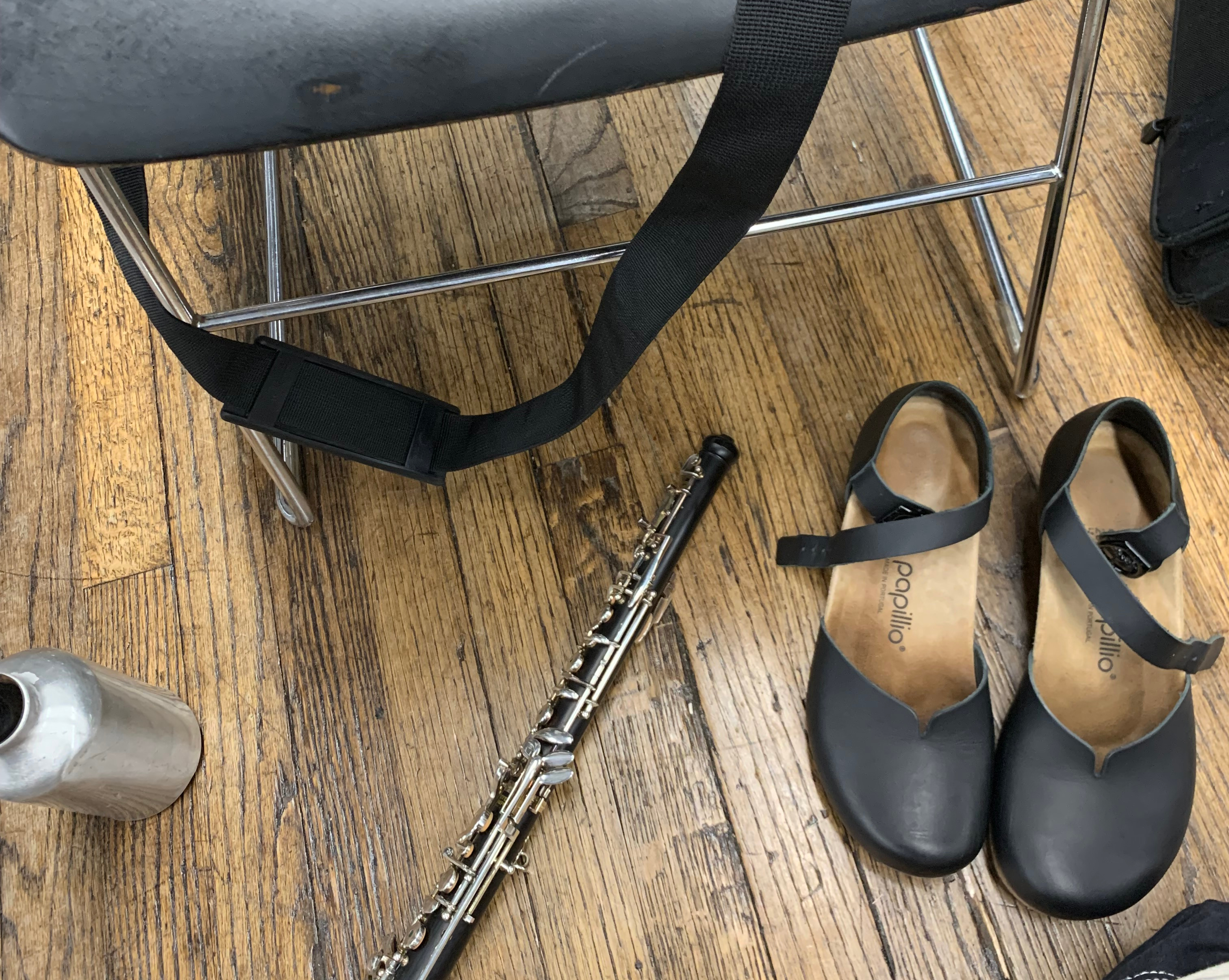
Are you struggling to balance school classes with practice time? Do you feel like you have to much on your plate and not enough time to practice music? Let’s talk about it.
Navigating high school is a journey that presents numerous challenges and opportunities. This is especially true for students who are passionate about music and are trying to balance academic commitments with their love for the art form.
That was me in 9th grade, when I had way too many academic commitments and was hardly able to practice oboe. Flash forward to 12th grade where the balance between academics and music was much more effective, and I had enough time to practice.
Today let’s dive into three strategies that can help you align your class choices and make sure you have enough time to practice. These are the strategies I used when navigating through high school.
If you are also a listener, there is a podcast episode all about this… just for you!
Step 1: Understand your priorities
Every student’s priorities will differ, and it’s essential to recognize what’s important to you.
If you just want to study music after high school, that is a priority. If you want to double major and study biology as well, that is also a priority. If you want to study abroad, that is a priority as well. These are all important to take into account.
The key is to have clarity about your goals and priorities.
Also keep in mind the type of school you might want to go to. Universities might be looking for different classes that a music academy. That research is important to help you understand your priorities.
So I challenge you to grab a notebook or paper, and write down some of your priorities. You don’t have to know all of them right away (I certainly didn’t), and they can change overtime. But writing down your current priorities is a big help.
Step 2: Pick Classes Accordingly
Choosing classes that align with your priorities is the second strategy. If you’re planning on going to a specialized music school, your class schedule will look different from someone who is going for a double major in music and biology at a university. Moreover, your music classes should complement your instrument and give you enough time for practice.
In 9th grade, my class schedule didn’t line with my priorities, which was oboe. And it resulted in my feeling overwhelmed and burnt out. By 12th grade, however, I chose classes that allowed for more time to focus on music. This adjustment allowed for a more balanced approach to academics and music, with sufficient time set aside for practice.
If you want some advanced classes, think about how they might compliment your music. For instance, I chose advanced classes in subject I enjoy, so it didn’t feel much like a chore. It is also good to supplement those advanced courses with some easier ones as well. Just make sure that you schedule aligns with your priorities.
Step 3: Give Yourself Some Grace
High school is a challenging time, and it’s essential to be kind to yourself. If you make mistakes or if things don’t go as planned, remember that it’s okay. You’re navigating this for the first time, and it’s a learning experience.
If you don’t end up with the grades you were hoping for, or if something doesn’t work out, remember to be kind to yourself. You are already doing a great job.
In the end, making a good balance is crucial for musicians. Knowing your personal priorities and choosing classes accordingly can not only help you practice your music, but it can also create a balance for you as a person.
All my best,
Eleanor

Leave a Reply