
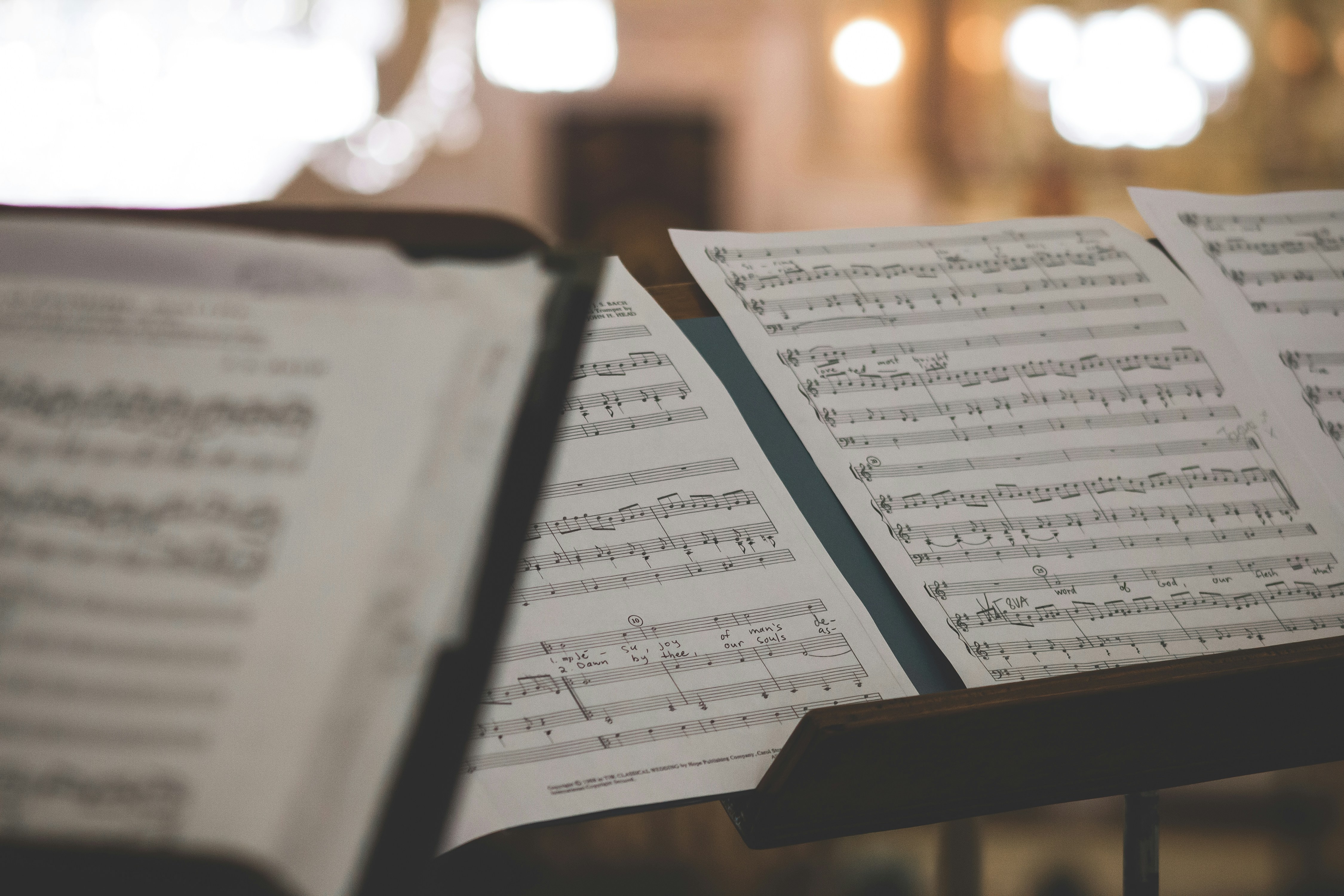
Are you about to take trial music lessons? Is it for a private teacher or a university teacher?
Taking trial lessons is a must when finding a new teacher, especially when it’s for a music school program.
And that is exactly what I was doing when I was auditioning for a music school. I ended up taking trial lessons with 12 different teachers and through those lessons I had multiple eye-opening experiences and realizations.
So if you are about to go through the trial lessons process, or you’re just interested in the process, or if you just want to know what I learned, let’s sit back, relax, let’s get into it.
Multi-tasking? There’s a podcast episode all about this!
Lesson 1: Taking what you need and letting go of the rest
Let me tell you what I mean by that. With a bunch of different teachers saying different things, it was so easy to become overwhelmed.
For instance, let’s say one teacher said that a passage should be quiet, and then the other teacher said, “no, there should be a crescendo here.” And then maybe another teacher said, “no, the whole thing should be loud.” All of a sudden you don’t know which to choose and it can be really overwhelming.
So I learned to take what was right for me and let go of the rest, especially when, for me, the British, Irish, and German short scrape players gave me advice that didn’t translate as well on my long scrape reed.
I am playing currently a long scrape read and I had trial lessons with short scrape teachers. Some of the things they said were really insightful and helpful. But some of the things didn’t translate as well, so we worked together to find a way that did. And sometimes, if something didn’t resonate as well with me because of my long scrape, I wrote it down, took note of it, and let it go for now.
Now, I’m not saying don’t do something a teacher says just because you don’t feel like it. What I am saying is carefully consider everything they say. Try it with an open mind. And all of the things that I didn’t end up doing, I still wrote them down. Because a lot of them were specifically about short scrape reeds and I knew that I would need that in the future.
If you don’t know yet, I am actually going to be transitioning from a long scrape reed to a short scrape reed. This year. I am moving to the UK to study oboe and I will be focusing on making that change. I am a dual citizen of the US and the UK, and so I will be moving back to the UK. I am so extremely excited about it and I hope that you come along. I can’t wait to take you with me on this journey. I will be documenting it with the podcast, with the blog, and with emails. So I can’t wait to take you along with this journey of moving and studying in the UK!
Lesson 2: Keeping a lesson journal
It is so important. After every lesson, I took about 20 to 30 minutes writing down all the key takeaways from the lesson, not only what the teacher said about my playing, but also my thoughts about their teaching style and how well we worked together. That way, when I was deciding on which school I wanted to go to, I went back through my notes and remembered how my trial lessons went and how well I worked with the different teacher. It was really helpful for when I was making that decision — just to go back and read all of the notes that I took right after those trial lessons. So I highly recommend doing that.
Another thing that you can do with these lesson journals is you can go back years later and remember what the teachers told you. I actually did this with a lesson that I had about a year ago and it was with Stephane Rancourt from the Royal Northern College of Music, who is a wonderful player and a wonderful teacher. And I wanted to remember some of the things that we had talked about in the lesson, and so I opened my notebook and just read all of my notes — and it was like I had that lesson yesterday. I could remember the things that we had discussed. So I really recommend doing a lesson journal.
Lesson 3: There are so many ways to approach oboe playing – or any instrument
This one really, really opened my eyes.
Because before the trial lessons, I was playing on the long scrape reed and I was learning things one way, which, if that is what you want to do, is a really good way of learning the oboe. But for me, I want to transition from the long scrape to the short scrape reed and I was really nervous about that because I didn’t know if I could do that or if it was possible.
So I had trial lessons and talked about it to short scrape players. And they really encouraged me, not only telling me, but showing me that it is possible to change reed style.
And from talking to different players was so beneficial. It really reminded me that our end goal is to sound good — and there are so many ways of getting to that goal. That was so refreshing to me.
If you are planning on doing any trial lessons in the future, I wish you the best. They are, to be honest, really fun and I hope you get the most you can out of them.
All my best,
Eleanor

Leave a Reply